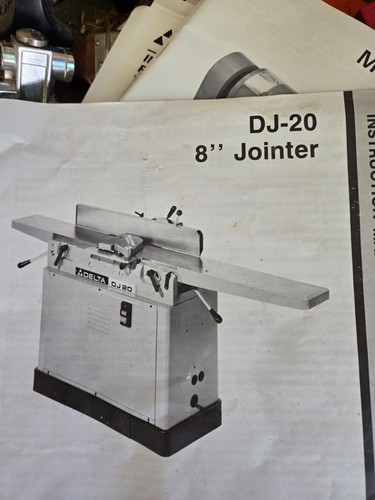
- Power and phase
- Delta's 2003 manual lists a 1-1/2 HP single-phase push-button version that ships wired for 230 V and can be rewired to 115 V, and magnetic-starter versions in single or three-phase at 200-230/460 V. The motor plate in the photos shows which one you have. Most home buyers want the single-phase version.
- Motor and bearings
- The cutterhead is driven by a V-belt under a belt guard. Ask for a video of it under power. It should spin up smoothly and run without a rumble or a slapping belt.
- Table and rust
- Ask for a photo with a straightedge on the outfeed table reaching at least 2 ft over the infeed. It should touch both with no gap. Light rust cleans up.
- Fence, guards and gauges
- Delta shipped the DJ-20 with its fence, the cutterhead guard and push blocks. Check the photos for all three, and ask the seller to set the fence at 90 and 45 degrees.
- Trunnions and adjustments
- Ask the seller to raise and lower both tables through their range. They should move smoothly and lock.
- Blades and knives
- It takes three 8 in knives, and 8 in jointer knife sets are still sold. Ask whether they're sharp, and whether the knife-setting gauge comes with it.
- Dating it
- It's a 2000s Delta Machinery jointer from the Jackson, Tennessee years, not a Rockwell-era machine. Like every Delta since 1984, it carries an 8-digit date code, two digits for the year, then a month letter from A for January to L for December.
- Moving it
- We couldn't find the DJ-20's weight in print. The jointer comes off its enclosed base, so it moves in two pieces. Strap the tables so they can't slide.
- Safety upgrades
- Make sure the cutterhead guard is there and springs back over the knives, and use the push blocks. A magnetic-starter version won't restart on its own after a power cut.
Check the listing photos against these lists, and ask the seller about anything you can’t see. A missing fence, guard or motor should come off the price.